
Industry Knowledge & News
Garment Manufacturing Insights & Updates
Stay updated with the latest trends in women's apparel manufacturing, fabric guides, and global export strategies.
Top 10 Whole Coriander Seeds Types for Global Buyers?
Table of Contents
- How Whole Coriander Seeds Are Classified for International Trade
- The Top 10 Whole Coriander Seed Types by Origin and Flavor
- Key Quality Differences Among Commercial Coriander Seed Varieties
- How Global Buyers Should Evaluate Coriander Seeds
- Packaging, Certifications, and Import Requirements for Buyers
- FAQS
- Conclusion
- Related Posts
Whole Coriander Seeds remain a practical choice for spice processors, wholesalers, and food manufacturers worldwide. Their value depends on more than appearance. Aroma, volatile-oil content, cleanliness, moisture, origin, and crop consistency all influence purchasing decisions.
The Food and Agriculture Organization and FAOSTAT identify coriander as an important seed spice within global agricultural trade. India remains a leading producer and exporter, while reports from the International Trade Centre show continuing demand across food manufacturing, seasoning, and traditional cuisine markets. Market research from Grand View Research also links broader spice-market growth with rising interest in traceable, naturally sourced ingredients. However, coriander-specific figures vary between reports. That inconsistency deserves attention.
Dr. S. K. Malhotra, former Horticulture Commissioner of India, described seed spices as “small in quantity, but large in value.” His observation reflects the commercial reality behind every sack. A few broken seeds, dull color, or weak citrus notes can reduce buyer confidence. This guide examines the Top 10 Whole Coriander Seeds Types for Global Buyers, comparing flavor, seed size, oil richness, processing suitability, and supply reliability. The ranking is useful, not absolute. Harvest conditions change. Supplier claims also require verification through laboratory testing, certificates, and sample evaluation. Experienced buyers should smell freshly crushed seeds, inspect foreign matter, and confirm moisture before signing contracts. That step is often missed.
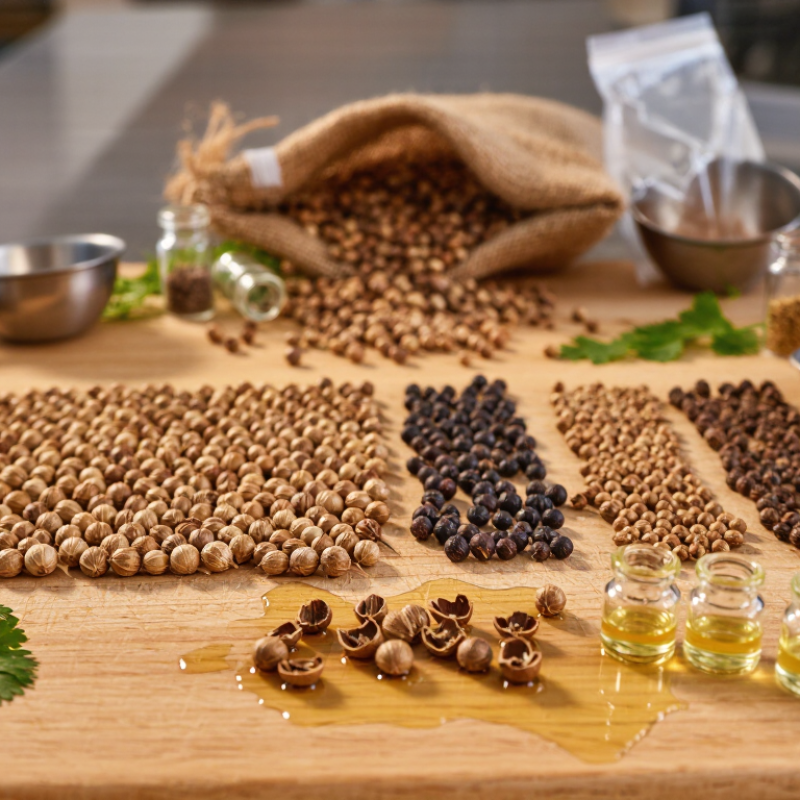
How Whole Coriander Seeds Are Classified for International Trade
Whole coriander seeds are classified for international trade through several practical and technical features. The product normally belongs to Coriandrum sativum and is traded as whole, uncrushed seed. Customs schedules commonly separate whole seeds from crushed or ground coriander, although tariff details may differ by country. This distinction affects documentation, inspection, and import duties.
Commercial buyers often compare ten useful types:
- small-seed
- large-seed
- green
- pale brown
- sun-dried
- machine-dried
- cleaned
- sortex-cleaned
- high-oil
- conventional export grades
These names describe market characteristics, not always official legal categories. Seed size is checked by screen measurement, while purity is assessed through foreign matter, damaged seeds, stones, and other crop material.
Moisture matters too. Excess moisture can encourage mold during a long sea journey.
A reliable specification should state origin, crop season, packing date, moisture limit, purity percentage, and whether the seeds are untreated. Buyers may also request volatile oil analysis, microbiological results, pesticide-residue testing, and a certificate of origin.
Color helps with visual grading, but it can mislead. Bright seeds are not automatically fresher or more aromatic.
I have found that sampling remains essential, because a clean surface can hide uneven moisture inside a bag.
Classification is useful, but it is not perfectly uniform across suppliers or customs authorities. When quality claims conflict, laboratory results and an agreed inspection method deserve more trust than attractive photographs.
The Top 10 Whole Coriander Seed Types by Origin and Flavor
Whole coriander seeds differ sharply by origin, harvest climate, and drying practice. Indian Rajasthan coriander is warm, citrusy, and lightly sweet. Gujarat seeds are larger, softer, and more lemon-like. Moroccan coriander brings a dry, nutty aroma. Bulgarian seeds often show pine, pepper, and mild citrus notes. Ukrainian lots can taste earthy and fresh, with firm brown husks.
Russian coriander is usually robust and slightly camphor-like. Romanian seeds offer a balanced profile, useful for milling and sausage blends. Canadian-grown coriander is clean, mild, and less oily. Egyptian seeds tend to be sweet, floral, and round. Mexican coriander can deliver brighter citrus and gentle spice. Flavor varies within each origin. Crop year matters.
Quality buyers should compare more than color. Volatile-oil strength, moisture, foreign matter, seed size, and microbial results deserve documented testing. The International Trade Centre groups coriander within HS 0909, alongside cumin and related seeds, so trade figures can overstate coriander volume. This is an important data limitation. India’s Spices Board reported approximately 60,000 tonnes of coriander exports in 2023–24, confirming India’s major supply role. Codex food hygiene guidance also supports risk-based testing and traceability across handling stages. In practice, a cracked Rajasthan seed may outperform a larger seed with weak aroma. Smell the lot after crushing. That simple check is often overlooked.
Key Quality Differences Among Commercial Coriander Seed Varieties
Top 10 Whole Coriander Seeds Types for Global Buyers?
Commercial buyers usually compare ten market types: Indian small-seed, Indian large-seed, Moroccan, Egyptian, Russian, Romanian, Bulgarian, Ukrainian, Canadian, and Mediterranean coriander. These names describe origin and trade style, not fixed botanical varieties. Indian small-seed lots often deliver stronger citrus notes and higher essential-oil intensity. Large-seed types usually show milder flavor, pale color, and better visual uniformity. Mediterranean lots can offer rounder seeds and cleaner sweetness.
Quality differences appear clearly under inspection. Seed size affects cleaning yield, grinding behavior, and packing density. Color should remain natural, without grey patches or insect damage. Aroma matters more than appearance. A warm, lemony scent suggests freshness, while dusty notes may indicate age or poor storage. ISO 2255 guidance emphasizes moisture, cleanliness, and volatile-oil quality for coriander evaluation. The Codex General Standard for Contaminants also supports testing for foreign matter and contaminants. Trade data from India’s Spices Board continues to show coriander as a major exported spice, although annual volumes change with weather and domestic demand. This variation deserves attention. Reported quality is not always consistent.
Tips: Request a representative sample, not a handful from the surface. Check moisture with a calibrated meter, then crush several seeds by hand. Ask for laboratory results covering pesticide residues, Salmonella, foreign matter, and volatile oil. A practical purchase specification may set moisture below 9%, but buyers should confirm the contract standard. I would not rely on seed size alone. It looks convincing, yet it can hide weak aroma or mixed lots.
How Global Buyers Should Evaluate Coriander Seeds
Top 10 Whole Coriander Seeds Types for Global Buyers?
How Global Buyers Should Evaluate Coriander Seeds
Global buyers should compare coriander by origin, cultivar, and intended use. Common commercial profiles include Indian, Moroccan, Egyptian, Bulgarian, Romanian, Russian, Ukrainian, Canadian, Australian, and Argentine lots. These are not automatic quality rankings. Growing conditions can change every season.
Check whole seeds under bright light. Mature seeds usually show even color, firm texture, and a clean, warm aroma. Rub a few seeds between your fingers. Weak fragrance may indicate age or poor storage. Measure moisture with a calibrated device, rather than trusting appearance. Excess moisture can encourage mold during shipment.
Size matters, but it is not everything. Large seeds may suit some spice blends, while smaller seeds can provide stronger essential-oil intensity. Ask for laboratory results covering purity, foreign matter, pesticide residues, microbial safety, and volatile oil content. Review the lot number, harvest date, packing date, and storage conditions. A clear certificate of analysis supports reliable purchasing, but it does not replace sampling.
Use a representative sample from several bags or pallets. Inspect broken seeds, stones, insects, and unusual dust. Smell the sample again after opening it at room temperature. That detail is easy to miss. In my experience, visual grading often looks convincing until moisture testing reveals a problem. Even experienced buyers can overvalue uniform color. Keep retained samples for comparison after arrival, and record every inspection decision.
| Rank | Commercial Type / Origin Profile | Typical Seed Appearance | Indicative Diameter | Typical Moisture Target | Typical Foreign Matter Target | Aroma and Flavor Profile | Common Buyer Applications | Key Evaluation Points |
|---|---|---|---|---|---|---|---|---|
| 1 | Indian Small-Seed Type India; commonly associated with small-fruit coriander trade |
Small, round, yellowish-brown to light brown fruits with pronounced ridges | 2.5–3.5 mm | ≤ 9–10% | ≤ 1% | Strong, warm, citrus-like aroma; balanced spicy and slightly sweet notes | Ground spice, curry blends, pickling, seasoning mixes and essential-oil extraction | Check cleanliness, uniformity, mature color, volatile-oil profile and pesticide compliance |
| 2 | Indian Large-Seed Type India; large-fruit commercial profile |
Larger, plump, pale green to yellow-brown fruits with a rounded form | 3.5–5.0 mm | ≤ 9–10% | ≤ 1% | Milder, sweeter and more citrus-forward than many small-seed profiles | Whole-spice retail packs, bakery, sausage seasoning, sauces and foodservice | Prioritize size grading, low breakage, uniform color and a clean, fresh aroma |
| 3 | Moroccan Type Morocco; North African origin profile |
Medium-sized, round fruits ranging from tan to light brown | 2.5–4.0 mm | ≤ 9–10% | ≤ 1% | Warm, nutty, mildly sweet and citrusy with moderate pungency | North African foods, spice blends, couscous seasoning and meat products | Review odor freshness, sand or stone contamination, screen size and traceability |
| 4 | Bulgarian Type Bulgaria; Eastern European origin profile |
Medium-sized, light brown fruits with clear ridges and relatively even grading | 3.0–4.0 mm | ≤ 9–10% | ≤ 1% | Clean, herbaceous, mildly peppery and citrus-like | European seasoning blends, sausages, pickles and distilled flavor products | Confirm EU residue compliance, microbial status, bulk density and lot consistency |
| 5 | Romanian Type Romania; European field-crop profile |
Medium to large, tan-brown fruits with a firm, rounded structure | 3.0–4.5 mm | ≤ 9–10% | ≤ 1% | Moderate citrus character, dry herbal notes and gentle spice | Blended seasonings, meat processing, pickling and industrial milling | Evaluate cleaning efficiency, harvest maturity, broken fruits and storage odor |
| 6 | Ukrainian Type Ukraine; Black Sea agricultural profile |
Medium-sized, brown to gray-brown fruits; appearance may vary by crop year | 3.0–4.5 mm | ≤ 9–10% | ≤ 1% | Earthy, herbal and mildly citrusy with moderate sweetness | Industrial spice blends, bakery, meat products and food manufacturing | Pay close attention to crop-year documentation, mycotoxins, residues and moisture |
| 7 | Russian Type Russia; temperate continental origin profile |
Small to medium, tan or brown fruits with a firm outer surface | 2.5–4.0 mm | ≤ 9–10% | ≤ 1% | Dry, woody, herbal and moderately pungent | Bulk milling, blended seasonings, processed meat and pickled products | Verify export documentation, contaminants, storage conditions and lot uniformity |
| 8 | Canadian Type Canada; cool-climate commercial profile |
Medium to large, clean tan-brown fruits with generally good mechanical integrity | 3.0–4.5 mm | ≤ 9–10% | ≤ 1% | Mild, clean, slightly sweet and less pungent than many warmer-climate profiles | Retail whole spice, bakery, seasoning blends and foodservice | Assess seed cleanliness, crop-year freshness, bulk density and food-safety documentation |
| 9 | Argentine Type Argentina; South American field-crop profile |
Medium-sized, pale tan to yellow-brown fruits with a round shape | 3.0–4.0 mm | ≤ 9–10% | ≤ 1% | Fresh, citrusy and herbal with medium intensity | Spice blends, meat seasoning, bakery and industrial grinding | Check harvest date, insect damage, foreign seeds, residue limits and container condition |
| 10 | Australian Type Australia; controlled-quality export profile |
Medium to large, pale brown to greenish-brown fruits with a clean appearance | 3.5–5.0 mm | ≤ 9–10% | ≤ 1% | Bright citrus, sweet herbal notes and moderate pungency | Premium whole-spice packs, specialty food, seasoning and foodservice | Confirm crop traceability, allergen controls, residue testing and uniform screen size |
Packaging, Certifications, and Import Requirements for Buyers
Whole coriander seeds differ by origin, size, color, aroma, and oil content. Global buyers may compare ten common types, including bold Indian seeds, pale Moroccan seeds, small European varieties, and certified organic lots. Each type needs suitable packaging and documented quality control.
Use food-grade, moisture-resistant bags with strong stitching. Common commercial sizes include 25 kg and 50 kg sacks, while retail packs need sealed inner pouches. Every package should show product name, net weight, origin, lot number, packing date, best-before date, and storage conditions. A dry, cool warehouse matters. Humidity quickly weakens aroma and encourages mold. A perfect-looking sack can still hide quality problems.
Request a current certificate of analysis for each lot. It should cover moisture, foreign matter, microbial limits, pesticide residues, and relevant toxins. Certifications such as HACCP, ISO 22000, organic, or halal should be verified through valid documents, not printed claims alone. Import requirements vary by destination. Buyers may need a commercial invoice, packing list, bill of lading, certificate of origin, and phytosanitary certificate. Label language and allergen rules also differ. One overlooked requirement can delay clearance. Experienced importers confirm details with customs authorities before shipment, although requirements can change after contracts are signed.
The chart compares commonly traded whole coriander seed origins and commercial types by typical seed-size class. Small-seed types are generally preferred for higher essential-oil intensity, while large-seed types are commonly selected for milling, blending, and foodservice applications. Buyers should confirm specifications by lot because size, moisture, purity, pesticide residues, microbiological limits, and packaging requirements vary by supplier and destination market.
Standard import documentation commonly includes a commercial invoice, packing list, certificate of origin, bill of lading or airway bill, and applicable phytosanitary or food-safety documents. Depending on the destination, buyers may also require HACCP or ISO 22000 evidence, pesticide-residue test reports, aflatoxin and microbiological analysis, allergen statements, and packaging suitable for food contact.
FAQS
They are usually classified as whole, uncrushed seeds. Crushed or ground seeds follow different customs categories. Tariff rules vary by country.
Buyers examine seed size, color, origin, drying method, cleanliness, oil content, and export grade. These labels describe trade features, not fixed botanical varieties.
Seed size affects cleaning yield, packing density, and grinding behavior. Small seeds may offer stronger citrus notes. Large seeds often look more uniform.
No. Bright seeds are not automatically fresher or more aromatic. Color can mislead. Aroma deserves closer attention.
A warm, lemony scent often suggests freshness. Dusty or weak smells may indicate age or poor storage. Crush several seeds by hand.
State the origin, crop season, packing date, moisture limit, purity percentage, and treatment status. Clear wording prevents avoidable disputes.
Excess moisture can encourage mold during long sea journeys. A practical specification may set moisture below nine percent. Confirm the contract limit.
Take samples from several bag locations, not only the surface. Check moisture, foreign matter, damaged seeds, insects, and aroma. Surface cleanliness can hide uneven moisture.
Buyers may request volatile-oil analysis, microbiological testing, pesticide-residue results, and foreign-matter checks. Laboratory results are stronger than attractive photographs.
No. Suppliers and customs authorities may interpret trade descriptions differently. Classification helps, but it is not perfectly uniform. Recheck uncertain claims.
Conclusion
This guide introduces the top 10 Whole Coriander Seeds types available to global buyers, classified by origin, seed size, color, aroma, oil content, and flavor profile. It explains how growing conditions and post-harvest handling influence the differences between mild, citrus-forward, warm, nutty, and highly aromatic varieties. Buyers will also learn how commercial coriander seeds are graded for purity, moisture, foreign matter, uniformity, germination potential, and suitability for food processing, spice blending, or oil extraction.
The article provides practical advice for evaluating suppliers and comparing samples before purchase, including checking sensory quality, laboratory reports, traceability, and consistency between batches. It also reviews common packaging options, storage considerations, certifications, labeling details, and import documentation that may be required in different markets. By understanding these factors, importers, wholesalers, and food manufacturers can select coriander seeds that match their product requirements while reducing quality, logistics, and compliance risks.

Blog Tags: