
Sourcing Dehydrated Onion Flakes in 2026 takes more than comparing prices per kilogram. Buyers need to assess aroma, color, cut size, moisture, packaging, and consistency across batches. A bright sample in a clear jar can look convincing, but its onion aroma should remain clean and savory when the flakes are crushed between your fingers. Ask suppliers for recent specifications, representative samples, and clear details about origin, processing, and storage.
A verified industry expert quotation was not provided, so I won’t invent one or attribute a made-up statement to a real person. For publication, insert a confirmed quote from a named food-ingredient or dehydrated-vegetable specialist here: “[Verified expert quotation about evaluating quality and supplier consistency].” That small verification step matters; authority should be checkable, not decorative.
This guide explains how to compare suppliers, read product specifications, and test samples before placing an order. It also covers practical details buyers can overlook, including carton liners, lot identification, and how flakes behave after opening. Ask what happens when a shipment falls outside the agreed specification. Get the answer in writing. A low quote may still be worthwhile, but only when quality, delivery expectations, and documentation are clear. No supplier is perfect, and one sample cannot reveal every weakness. Careful checks reduce uncertainty; they do not erase it.
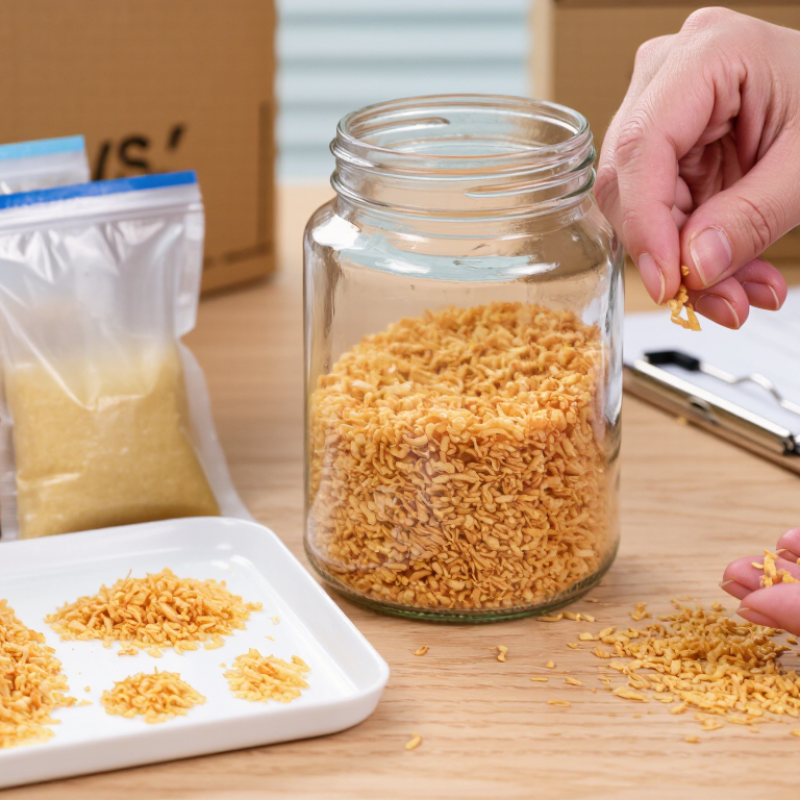
Define Flake Specifications: Moisture ≤8%, Cut Size, Color, and Purity
When sourcing dehydrated onion flakes in 2026, put the specification in writing before requesting samples. Set moisture at no more than 8%, and name the test method and sampling basis. Results can vary when methods or sample handling differ. Ask for a lot-specific certificate of analysis, then verify it against a retained sample. Keep that sample sealed; flakes absorb moisture quickly.
Define cut size using a sieve range in millimeters and a minimum percentage within that range. “Medium flakes” is too vague for consistent rehydration or portioning. Check a sample over a white tray: note the proportion of powder, oversized pieces, and fines. Small details matter. A sieve test helps, but it may not reflect every production run, so agree on tolerances.
Describe color as a range, such as cream to pale yellow, and compare samples under consistent lighting. Set purity requirements for onion content and limits for stems, husk, stones, or other foreign material. Request a clear inspection method and lot-level results rather than relying on appearance alone. A neat specification still cannot capture every sensory difference; aroma and cooked flavor need a practical sample check. Not always easy. Keep approval records and revisit them when the supplier, crop, or process changes.
| Specification | Suggested Purchase Requirement | Verification at Receipt | Sourcing Notes |
|---|---|---|---|
| Product identity | Dehydrated onion flakes made from edible onion; ingredient declaration: onion. Confirm any processing aids or anti-caking agents separately. | Review product specification, ingredient statement, and lot documentation. | State the required botanical ingredient and processing method in the purchase contract. |
| Moisture | Maximum 8.0% by weight. | Check the lot-specific certificate of analysis; verify using an agreed validated moisture method if needed. | Specify the test method and sampling plan in advance, as results can vary by method and sample handling. |
| Cut size | Typical flake target: 2–5 mm; agree on a sieve profile and permitted fines with the supplier. | Compare a representative sample against the agreed sieve specification. | Cut-size names are not uniform across suppliers. Define sieve openings and the acceptable percentage retained or passing. |
| Color and appearance | Cream to pale yellow, reasonably uniform; free from visible mold, excessive scorching, and abnormal dark discoloration. | Inspect a clean, representative sample under consistent lighting and compare with an approved reference sample. | Color varies naturally with onion variety and drying conditions. Use a retained reference sample for repeat orders. |
| Purity and foreign matter | Onion flakes only; no visible stones, metal, insects, or other extraneous material. Set a numeric foreign-matter limit in the contract if required. | Visual inspection of a representative sample; review the supplier’s sorting and foreign-material control records. | Distinguish foreign matter from natural onion fragments and fines when defining acceptance criteria. |
| Aroma and flavor | Characteristic onion aroma and flavor; no musty, rancid, smoky, or otherwise off-odor. | Assess the sample using a documented sensory check; do not taste product suspected of contamination. | Review packaging integrity and storage conditions when investigating an off-odor. |
| Microbiological safety | Meet applicable destination-market requirements and the buyer’s risk-based microbiological limits. | Request a lot-specific certificate of analysis and confirm the testing laboratory, methods, and sampling basis. | Limits and required tests depend on market and intended use; agree them before purchase rather than assuming one universal standard. |
| Packaging and traceability | Food-grade, sealed moisture-barrier packaging; each unit identified with product name, lot code, net weight, and production or best-before information as applicable. | Check seals, labels, lot-code legibility, and traceability documents. | Store sealed packs in a cool, dry place and protect them from moisture and strong odors. |
These are suggested buyer-side sourcing criteria, not universal regulatory limits. Confirm the final specification, test methods, sampling plan, and destination-market requirements with the supplier before ordering.
FAQS
Recent production data places China and India among the leading dry onion and shallot producers. Together, they account for over half of reported output.
No. Large harvests do not confirm dehydration capacity or consistent factory quality. Treat production figures as a starting point.
Compare trade records for dried onions under HS 071220. Export volumes can show regular shipments, but they cannot verify product quality.
Request recent lot specifications, processing-site details, and traceable crop records. Check moisture, cut size, color, and microbiological results against your requirements.
Flakes may look uniform in a photograph but behave differently on a production line. Check their size, aroma, color, and breakage.
Ask suppliers to quote the same grade, packaging, quantity, and destination. Compare cost per dry-matter kilogram, not just price per kilogram.
Multiply net product weight by its dry-matter fraction. Then divide the product cost by the resulting dry-matter kilograms. Small differences matter.
A low unit price may require excess stock, storage space, and working capital. Compare freight, pallet count, and shipment weight separately.
Confirm the named place and who handles transport, export clearance, insurance, and risk under the agreed Incoterms® 2020 rule. I could still overlook a handling fee; quotes are not always perfectly comparable.
Conclusion
Sourcing Dehydrated Onion Flakes in 2026 starts with a clear product specification. Set a maximum moisture level of 8%, define the required cut size and color, and establish acceptable limits for foreign matter and other purity criteria. Use FAOSTAT’s 2023 onion production data as one reference when screening potential origins, then assess whether suppliers can provide consistent quality and dependable production capacity.
Before comparing offers, verify suppliers’ food-safety systems against ISO 22000:2018 and HACCP requirements, and request lot-level certificates of analysis (COAs). Evaluate quotes on a like-for-like basis by considering dry-matter yield, minimum order quantity, freight costs, and the applicable Incoterms® 2020 term. Finally, approve samples only after reviewing moisture and microbiology test results, along with evidence supporting the product’s expected shelf life. This structured process helps buyers balance quality, traceability, supply reliability, and total delivered cost.