
Industry Knowledge & News
Garment Manufacturing Insights & Updates
Stay updated with the latest trends in women's apparel manufacturing, fabric guides, and global export strategies.
How to Source Kabuli Chickpeas Globally in 2026?
Table of Contents
- Define Kabuli Grades Through Codex and FAO Quality Standards
- Map 2026 Supply Using USDA PSD and FAOSTAT Production Data
- Compare Origins by USDA Yields, Export Volumes, and Crop Calendars
- Set Prices with CICILS Benchmarks, Grade Premiums, and Incoterms
- Audit Suppliers Using COAs, MRL Tests, and Codex Traceability Rules
- FAQS
- Conclusion
- Related Posts
Sourcing Kabuli Chickpeas globally in 2026 requires more than comparing prices on a supplier spreadsheet. Buyers must connect farm origin, crop quality, logistics, and responsible trade practices. Kabuli Chickpeas vary in size, color, texture, and cooking performance. These differences can affect retail value and customer satisfaction.
A reliable sourcing process begins with clear specifications. Define the preferred caliber, moisture range, foreign-material tolerance, packaging format, and crop year. Ask suppliers for harvest records, laboratory reports, traceability documents, and applicable phytosanitary certificates. Independent testing can verify moisture, pesticide residues, microbiological safety, and aflatoxin levels. Samples should be cooked, not merely inspected under warehouse lighting. A bright sample may still perform poorly in a commercial kitchen.
Global supply decisions should also consider origin diversification. Turkey, Mexico, Argentina, Canada, and other producing regions may offer different harvest windows and risk profiles. Freight rates, port congestion, currency changes, and weather events can quickly alter landed costs. A supplier with attractive pricing may lack consistent grading capacity. That weakness can appear only after several containers.
Human judgment still matters.
Buyers should visit facilities when practical or use qualified third-party auditors. They should review worker safety, environmental controls, storage conditions, and complaint procedures. No sourcing plan is perfect. Forecasts can fail, and inspection reports may miss hidden handling problems. That uncertainty deserves a contingency plan, including backup suppliers and flexible delivery dates. This guide explains how to evaluate suppliers, verify quality, manage contracts, and build a more resilient Kabuli Chickpeas sourcing strategy for 2026.
Define Kabuli Grades Through Codex and FAO Quality Standards
How to Source Kabuli Chickpeas Globally in 2026?
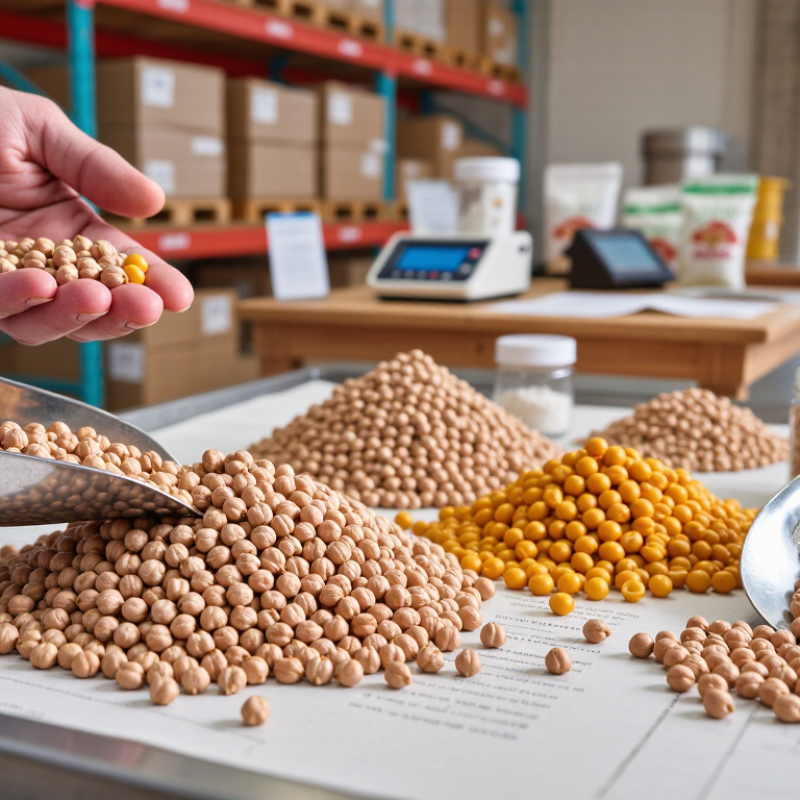
Kabuli sourcing should begin with a clear quality definition, not a supplier list. Codex Standard CXS 171-1989, revised in 2013, provides an international baseline for pulses, including cleanliness, safety, moisture, foreign matter, and defects. It does not create one universal “Kabuli Grade 8” or “Grade 9” system. Those commercial labels usually describe seed size, color, damage, and split percentage.
FAOSTAT recorded roughly 15 million tonnes of chickpea production globally in 2023. This large supply base still hides uneven quality. FAO pulse guidance emphasizes moisture control, pest prevention, proper storage, and traceability. A practical buying specification should therefore state moisture limits, minimum seed count, tolerance for discolored grains, and acceptable foreign material. Keep every value measurable.
Size matters visibly. Large, pale Kabuli seeds should show consistent color in a 500-gram sample. Dark spots, shriveling, or insect damage can signal poor storage. Codex compliance is essential, but it is only the floor. National import rules and buyer specifications may be stricter. A certificate alone is not enough. Sampling at loading remains necessary. I would also compare laboratory results with the physical sample, because small discrepancies can become costly claims. This process is not perfect. Yet it reduces avoidable surprises and makes global grade comparisons more credible. Sources: Codex Alimentarius, CXS 171-1989; FAOSTAT, Crops and Livestock Products database; FAO, pulse quality and handling guidance.
How to Source Kabuli Chickpeas Globally in 2026?
Define Kabuli Grades Through Codex and FAO Quality Standards
How to use these benchmarks: Kabuli commercial grades are normally defined by seed size and count, such as 20/30, 30/40, 40/50 and 50/60. These size bands are buyer and market specifications rather than Codex grades. Codex quality limits provide a common baseline for comparing suppliers and import origins.
The chart shows maximum permitted levels for key quality factors under the Codex Standard for Certain Pulses, CXS 171-1989. Lower values indicate tighter control. Moisture, extraneous matter and defective seeds should be verified through an independent pre-shipment inspection and laboratory test.
Reference: FAO/WHO Codex Alimentarius, CXS 171-1989, Standard for Certain Pulses. Importers should also confirm destination-country pesticide, mycotoxin, phytosanitary and labeling requirements.
Map 2026 Supply Using USDA PSD and FAOSTAT Production Data
Sourcing Kabuli chickpeas in 2026 starts with separating production evidence from market assumptions. USDA’s Production, Supply and Distribution database estimates global chickpea output at roughly 18 million metric tons for 2025/26. India remains the largest producer, while Australia, Türkiye, Canada, and Mexico provide important export-oriented supply. However, USDA PSD generally reports chickpeas as one category. It does not consistently isolate Kabuli size grades.
That limitation matters. FAOSTAT’s latest complete crop records place global chickpea production near 15 million metric tons in 2023, but national reporting methods differ. Some countries record harvested volume, while others revise estimates after the season. Use both datasets. Compare production trends, harvested area, and yield before contacting suppliers. A sudden yield increase deserves checking.
Kabuli sourcing also requires physical verification. Large cream-colored seeds may meet a contract grade, yet fail after cleaning or calibration. Request recent lot specifications, crop year, moisture, foreign material, split percentage, and size distribution. Map likely supply by country, then validate port access and harvest timing. The data is useful, not perfect. That imperfection should shape the buying plan.
Compare Origins by USDA Yields, Export Volumes, and Crop Calendars
Sourcing Kabuli chickpeas in 2026 requires separating yield from export scale. USDA Foreign Agricultural Service data place recent average chickpea yields near 1.3 tonnes per hectare in Canada, 1.2 in Türkiye, 1.0 in Australia, and below 1.0 in Mexico. These are country averages, not Kabuli-only results. That distinction matters.
ITC Trade Map records HS 071320 exports, combining Kabuli and smaller-seeded desi chickpeas. In 2024, Australia shipped roughly 1 million tonnes, while Canada exported about 500,000 tonnes. Türkiye and Mexico supplied smaller volumes, generally below 200,000 tonnes each. Australia offers scale, but its crop is harvested from October through December. Canada usually harvests between August and October, creating earlier shipment windows. Türkiye commonly harvests from June through August. Mexico can provide a different calendar, with harvests often extending from May into August.
Crop timing changes contract risk. A buyer seeking September loading may find Canadian stocks more practical than fresh Australian cargo. Storage quality also matters. USDA reports do not fully show split rates, color retention, or screen size. Ask for crop-year data, regional yield records, moisture results, and size distribution before comparing offers.
One weakness remains. Export totals can look impressive while Kabuli availability is limited. I would compare shipment history against field-level supply evidence, not volume alone. Prices can move sharply when rainfall delays harvest. Short crops happen.
| Origin | USDA Marketing Year | Typical Kabuli Harvest Window | USDA Chickpea Yield (2023/24, t/ha) |
USDA Chickpea Exports (2023/24, 1,000 t) |
Primary Export Season | Typical Kabuli Calibers | 2026 Sourcing Profile |
|---|---|---|---|---|---|---|---|
| Australia | October–September | October–December | 1.18 | 1,050 | December–June | 8–9 mm; 9–10 mm | Large exportable surplus; harvest timing complements Northern Hemisphere suppliers. |
| Türkiye | August–July | June–August | 1.00 | 250 | August–February | 8–9 mm; 9–10 mm | Strong regional supply base with relatively short transit to Europe, the Middle East, and North Africa. |
| Mexico | October–September | October–December | 1.41 | 110 | November–May | 8–9 mm; 9–10 mm; jumbo lots | High average yield and established North American logistics; availability can vary by state and rainfall. |
| Canada | August–July | August–October | 1.11 | 170 | September–May | 8–9 mm; 9–10 mm | Reliable identity-preserved pulse infrastructure; winter logistics may affect inland delivery schedules. |
| Argentina | October–September | November–December | 0.79 | 85 | December–June | 8–9 mm; 9–10 mm | Useful Southern Hemisphere alternative, especially for buyers seeking crop diversification. |
| United States | August–July | August–October | 1.50 | 75 | September–April | 8–9 mm; 9–10 mm; jumbo lots | High productivity and strong grading systems, although exportable volumes are smaller than Australia’s. |
| India | October–September | February–April | 1.08 | 200 | April–October | 7–8 mm; 8–9 mm | Very large chickpea market; Kabuli supply is a specialty segment and domestic demand can absorb substantial volumes. |
Set Prices with CICILS Benchmarks, Grade Premiums, and Incoterms
Global Kabuli chickpea sourcing needs a price structure, not a single offer. FAOSTAT data reported global chickpea production near 15 million tonnes in 2023, showing a deep but uneven supply base. USDA Foreign Agricultural Service outlooks also highlight weather and crop concentration as major price risks. Use the latest CICILS benchmark as the reference level, then record crop year, origin, currency, and shipment month.
Grade premiums must be visible. A 9 mm Kabuli lot should not share the same price as an 8 mm lot. Add premiums for bright color, low moisture, clean appearance, and minimal splits. Deduct for foreign matter, insect damage, uneven sizing, and excess moisture. A practical worksheet might show: CICILS benchmark plus size premium, quality premium, inspection cost, and logistics adjustment. Keep each item measurable.
Incoterms can quietly change the real cost. Under FOB, the buyer controls ocean freight and insurance after loading. Under CIF, the seller includes freight and insurance to the named port, but destination charges may remain uncertain. Under DAP, delivery responsibility extends inland, requiring clearer unloading and customs arrangements.
Freight reports from the International Grain Council show how dry-bulk and container costs can shift during peak seasons. I would request two quotations: FOB and CIF. The cheaper one is not always cheaper. My imperfect habit is trusting headline prices too quickly; port congestion, demurrage, and inspection delays often expose that mistake.
Audit Suppliers Using COAs, MRL Tests, and Codex Traceability Rules
How to Source Kabuli Chickpeas Globally in 2026?
USDA Foreign Agricultural Service estimates world chickpea production near 15 million metric tons in 2024/25. That scale creates audit pressure. Kabuli buyers should request a separate Certificate of Analysis (COA) for every lot, not one annual document. The COA should show moisture, foreign matter, pesticide residues, aflatoxins, laboratory methods, detection limits, and sampling dates. Confirm the laboratory’s accreditation and match the lot number with shipping documents.
A clean certificate is not proof of a clean supply chain.
MRL compliance requires market-specific testing. Codex Alimentarius pesticide standards provide international reference values, but importing countries may enforce stricter limits. Compare results with the destination market and the current Codex MRL database. FAO and WHO Joint Meeting on Pesticide Residues reports can support risk interpretation, especially when compounds approach legal limits.
Test composite samples from bags, silos, and containers. One sealed sample can miss uneven contamination.
That weakness deserves attention.
Codex traceability guidance requires businesses to identify suppliers and immediate customers. For Kabuli chickpeas, the record should connect farm or collection point, harvest date, processor, storage bin, lot code, and container seal. Keep pesticide applications, fumigation records, water sources, and temperature logs.
Ask suppliers to perform a mock recall within 24 hours. Slow answers reveal gaps.
Yet audits are not perfect; supplier records may be translated, incomplete, or copied. Independent verification, repeat sampling, and documented corrective actions make procurement decisions more reliable.
FAQS
Define seed size, color, moisture, foreign matter, defects, and split percentage. Commercial grade labels are not universal. Write every limit numerically.
No single international system controls these labels. They usually describe seed diameter, appearance, damage, and splits. Confirm meanings with each supplier.
State the maximum moisture level, minimum seed count, foreign material tolerance, and discoloration limit. Include acceptable insect damage and split percentages. Vague wording creates disputes.
Inspect a representative 500-gram sample before shipment. Look for pale, consistent seeds, dark spots, shriveling, and insect damage. Small samples can mislead.
No. Compare laboratory results with the actual cargo sample. Sampling during loading remains important. Certificates are useful, not magical.
Start with a current industry benchmark. Record origin, crop year, currency, shipment month, size, quality premiums, inspection fees, and logistics costs. Every adjustment should be measurable.
A 9-millimeter lot may receive a premium over an 8-millimeter lot. Bright color, low moisture, clean appearance, and fewer splits can add value. Size alone does not prove quality.
Freight, insurance, port handling, customs, unloading, and inland delivery can change the final cost. Request both port-delivered and shipment-point quotations. The cheaper offer may not be cheaper.
Weather, crop concentration, port congestion, inspection delays, demurrage, and changing freight costs can affect supply. Storage failures may also create discoloration or insect damage. I still trust headline prices too quickly sometimes.
Conclusion
Sourcing Kabuli Chickpeas globally in 2026 requires a structured, evidence-based approach. Begin by defining acceptable grades through Codex and FAO quality principles, covering size, color, moisture, foreign material, damaged kernels, and food-safety requirements. Then map expected supply with USDA PSD and FAOSTAT production data, comparing major origins by yield trends, export capacity, harvest timing, and crop calendars. This helps buyers identify reliable sourcing windows and reduce seasonal supply risks.
Pricing should be built around recognized CICILS benchmarks, adjusted for grade, size, quality premiums, freight, currency, and agreed Incoterms. Supplier audits should verify production records, lot identification, certificates of analysis, pesticide-residue testing, microbiological results, and traceability from farm or processor to shipment. Clear specifications, independent inspections, representative samples, and documented corrective actions can improve consistency and accountability. By combining market data, transparent pricing, and rigorous quality controls, importers can develop a resilient Kabuli Chickpeas sourcing program suited to changing conditions in 2026.

Blog Tags: