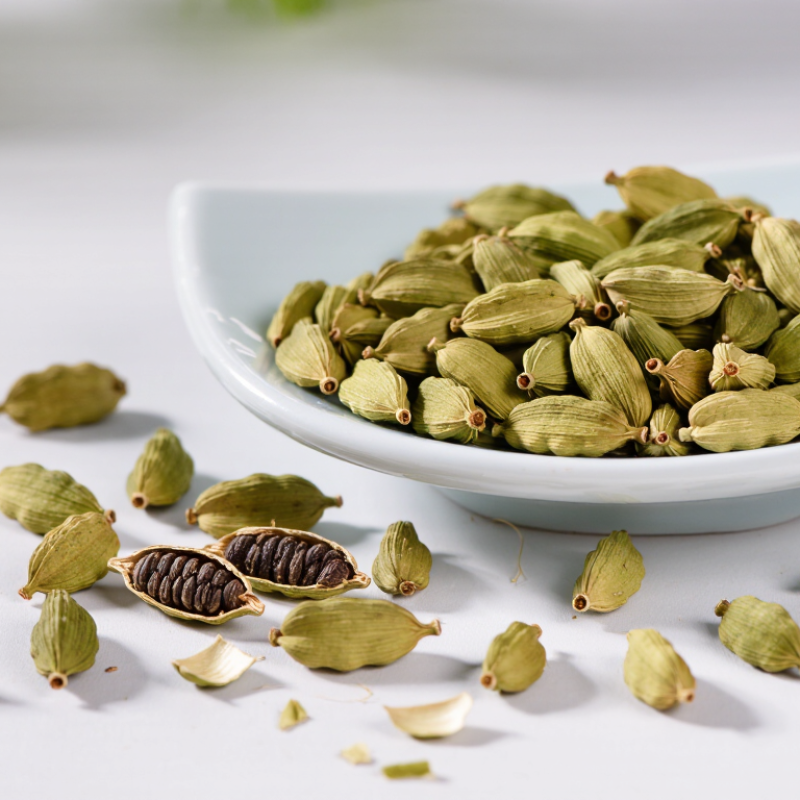
Choosing the best Green Cardamom Pods for global buyers requires more than comparing bright color and attractive packaging. A strong purchase decision considers origin, harvest timing, pod size, aroma, moisture, cleanliness, and traceability. These details become visible when pods are opened. Fresh cardamom should release a sweet, camphor-like fragrance, while stale pods may smell dusty or flat.
Spice scientist K. V. Peter describes cardamom as “the queen of spices.” That reputation reflects its delicate balance of eucalyptus-like freshness, citrus notes, and warm sweetness. Yet reputation is not enough. Buyers should request laboratory results, pesticide compliance documents, microbial testing, and clear country-of-origin records. Responsible suppliers should also explain drying methods, grading systems, storage conditions, and packaging materials.
This guide evaluates leading Green Cardamom Pods for international sourcing in 2026. It focuses on practical quality, not exaggerated claims. Whole pods can look impressive.
They can still disappoint.
Some shipments lose aroma because they travel in warm, humid containers. Others contain mixed grades that were not clearly disclosed. These problems remind buyers to inspect samples before signing large contracts. Certifications may strengthen trust, but they do not replace careful verification. Harvest season, producer practices, and supply continuity also deserve attention.
The strongest options combine clean appearance, dense seed content, stable moisture, reliable documentation, and consistent flavor. Buyers should remain cautious when prices seem unusually low. Quality has limits. A thoughtful comparison protects product performance, customer expectations, and long-term supplier relationships.
2026 Green Cardamom Market Scope: FAOSTAT Output and ITC HS 090831 Data
2026 Best Green Cardamom Pods for Global Buyers
FAOSTAT’s latest available production series places global cardamom output in the low-six-figure-tonne range, with Guatemala and India among the leading producing countries. These figures describe farm production, not export-ready inventory. That distinction matters. Harvest volume can include pods later rejected for color, size, moisture, or damaged capsules.
ITC Trade Map and UN Comtrade classify whole green cardamom under HS 090831, “neither crushed nor ground.” The code excludes ground cardamom under HS 090832. Through 2024, HS 090831 records show active trade flows from major producing origins toward Gulf, South Asian, European, and North American markets. However, customs values can differ from farm output because of re-exports, inventory timing, freight costs, and changing currency rates. The comparison is imperfect.
For 2026 sourcing, buyers should read both datasets together. FAOSTAT helps assess supply concentration and production trends. ITC data helps examine declared export value, shipment volume, and destination demand. A practical review should also request recent lot photographs, capsule size information, moisture results, and laboratory tests for contaminants. Bright green color alone proves little. Aroma should remain fresh, resinous, and clean after opening the pod. Small details often reveal storage problems. Data revisions remain possible, so procurement decisions should not depend on one annual figure.
Pod Quality Grading: ISO 3632-1 Oil, Color, and Moisture Metrics
2026 Best Green Cardamom Pods for Global Buyers
Pod Quality Grading: ISO 3632-1 Oil, Color, and Moisture Metrics
A careful buyer should pause before using ISO 3632-1 for green cardamom. This standard evaluates saffron, not cardamom pods. It does not provide a complete cardamom grading system. For reliable purchasing, request a documented test plan covering volatile oil, color, moisture, and foreign matter. Essential oil results should come from a qualified laboratory using a validated method. Ask for the test date and sample identity. A bright green pod is attractive, but color alone proves little. Inspect pods under neutral light, checking for dull patches, bleaching, mold, or uneven drying.
Moisture deserves close attention. Excess moisture can encourage mold and reduce shelf life during ocean transport. Very dry pods may crack easily and lose aroma. Buyers should agree on a moisture limit before shipment, then verify it through oven testing or Karl Fischer analysis. Sampling also matters. A handful from the top cannot represent a full lot. Draw portions from multiple cartons and combine them carefully. Small details matter. In practice, oil readings can vary with storage age, grinding, temperature, and laboratory technique. That is easy to overlook. A good specification should therefore state the method, tolerance, packaging condition, and retest procedure. Even experienced teams sometimes trust appearance too much. Better records create better buying decisions.
2026 Best Green Cardamom Pods for Global Buyers – Pod Quality Grading: ISO 3632-1 Oil, Color, and Moisture Metrics
| Buyer Grade |
Typical Pod Size |
Appearance and Color |
Moisture Content
(% m/m, maximum) |
Volatile Oil
(% v/w, minimum) |
Foreign Matter
(% m/m, maximum) |
Defective or Empty Pods
(% m/m, maximum) |
Recommended Commercial Use |
| Premium Whole Pods |
8.0 mm and above; well-filled, intact capsules |
Uniform bright green to deep green; clean surface; minimal yellowing, blackening, splits, or insect damage |
10.0 |
5.0 |
0.5 |
2.0 |
High-end retail packs, premium culinary applications, and export presentation grades |
| Standard Export Pods |
7.0–8.0 mm; sound pods with normal variation |
Green to pale green; slight color variation permitted; no visible mold or active infestation |
12.0 |
3.5 |
1.0 |
5.0 |
Foodservice, spice blending, grinding, and general international trade |
| Commercial Whole Pods |
6.0–7.0 mm; mixed but usable pod size |
Pale green, yellow-green, or naturally faded pods; clean and free from musty odor |
13.0 |
2.5 |
2.0 |
8.0 |
Industrial grinding, extracts, blended spices, and cost-sensitive applications |
| Processing Material |
Below 6.0 mm, broken pods, or screened fragments |
Color may be faded; material must remain clean, dry, and free from mold, live pests, and abnormal odor |
13.0 |
2.0 |
3.0 |
Buyer-defined |
Extraction, oleoresin production, powder manufacture, and non-retail processing |
Standards clarification: ISO 3632-1 is a saffron specification and does not establish official grading classes for green cardamom. For cardamom procurement, volatile oil is commonly evaluated using an appropriate spice volatile-oil method such as ISO 6571, while moisture may be tested using a validated oven-drying or equivalent laboratory method. The grading bands above are practical buyer acceptance ranges, not official ISO cardamom grades.
Inspection guidance: Confirm each lot using a representative sample, laboratory moisture and volatile-oil results, sieve or caliper sizing, visual color assessment, foreign-matter inspection, and checks for mold, live insects, pesticide residues, aflatoxins, and Salmonella according to the destination market’s legal requirements.
Origin Comparison: India and Guatemala by ITC Export Data
For global buyers, the 2026 green cardamom market demands more than attractive pods. ITC export data provides a useful comparison between India and Guatemala, especially under HS codes for whole cardamom. Guatemala usually leads export volume, supported by large commercial plantations and strong shipment capacity. Its pods often show a bright green appearance and consistent sizing.
India offers a different buying profile. Export quantities may be lower, yet Indian cardamom is valued for complex aroma and regional diversity. Notes can range from eucalyptus and camphor to sweet citrus. ITC figures should be checked by year, quantity, and export value, not volume alone. A higher unit value may indicate stronger quality, tighter supply, or simply different market destinations.
I would request recent samples before signing a large contract. Inspect pod color, moisture, seed density, and aroma after crushing. Data can guide a shortlist, but it cannot reveal every warehouse condition. Guatemala may suit buyers needing dependable scale. India may fit buyers seeking distinctive sensory character. This distinction is useful, but not absolute. Crop weather, curing methods, and harvest timing can change the result. Small details matter.
Buyer Compliance: Codex MRLs, FDA Rules, and Microbial Standards
For global buyers, green cardamom pods are a compliance item, not only a flavor ingredient. Each lot should include its origin, packing date, lot code, and traceable supplier record. Codex pesticide MRLs must be checked against the exact commodity and pesticide combination. Limits can differ by market, so a general “compliant” statement is not enough. Request recent residue results from an accredited laboratory.
For shipments entering the United States, importers should assess foreign suppliers under applicable FDA food safety requirements. Depending on the supply chain role, records may include facility registration, prior notice, hazard analysis, preventive controls, and Foreign Supplier Verification Program evidence. The documents should match the physical lot. A certificate with a wrong lot number creates doubt.
Microbial control needs equal attention. Buyers commonly request Salmonella absence in 25 grams, but legal and customer criteria may vary. Testing may also cover E. coli, total plate count, yeast, and mold. Use representative sampling, sealed packaging, and documented storage temperatures. Humidity is easy to underestimate. A dry warehouse can still develop wet pockets inside cartons. No certificate replaces a failed lot test. Some suppliers, including experienced ones, may still under-sample. That point deserves review before contracting.
Supplier Selection: HS 090832 Imports, Incoterms, and Landed Cost Metrics
For 2026 cardamom sourcing, supplier selection should begin with accurate product classification. HS 090832 generally covers cardamom that is crushed or ground, but national tariff extensions may differ. Confirm the code with a customs broker before ordering. I ask suppliers for crop year, origin, moisture results, volatile oil data, and batch photographs. A clean sample can still hide uneven grinding or stale aroma.
Incoterms change the buyer’s real exposure. FCA can offer clearer control over inland transport and export clearance. CIF may look simpler, yet destination charges often remain outside the quoted price. DDP appears convenient, but tax treatment and importer responsibilities need careful confirmation. I compare at least three offers using the same specification, shipment size, currency, and delivery point. Small wording differences create large cost gaps.
My landed-cost sheet includes product value, export packing, origin transport, freight, insurance, duties, customs fees, inspection, storage, and inland delivery. For each shipment, I calculate cost per usable kilogram, not only cost per shipped kilogram. This matters when moisture loss, broken pods, or rejected lots reduce yield. I once trusted a low freight quote and missed terminal handling charges. That mistake still shapes my checks. Ask for recent shipment records, corrective-action examples, and payment terms. Supplier reliability is measurable through consistent documents, responsive communication, and results across several lots.
FAQS
It measures farm output, not export-ready stock. Some pods may later fail color, size, moisture, or damage checks.
Guatemala and India are major producing countries. Their supply profiles differ in scale, aroma, curing methods, and harvest timing.
HS 090831 covers whole green cardamom that is neither crushed nor ground. Ground cardamom uses a different classification.
Trade data may include re-exports, stored inventory, freight costs, and currency changes. The comparison is imperfect.
Request recent lot photographs, capsule sizes, moisture results, and contaminant tests. Open several pods and check the aroma.
No. Color alone proves little. Fresh pods should have a clean, resinous aroma and firm seeds.
Guatemala may suit buyers needing dependable volume and consistent sizing. India may suit buyers seeking complex, regional aroma.
Look for fresh resinous notes, eucalyptus, camphor, or sweet citrus. Crush a few seeds. The smell should remain clean.
No. Review production trends, shipment volume, export value, and destination demand together. Data revisions remain possible.
Not necessarily. It may reflect quality, limited supply, destination differences, or currency effects. I would request samples first.
Conclusion
This 2026 guide to Green Cardamom Pods offers global buyers a practical framework for evaluating supply, quality, origin, compliance, and total purchasing cost. It explains how FAOSTAT production figures and ITC HS 090831 trade data can help define market scope, identify supply trends, and support informed sourcing decisions. It also introduces key pod-quality considerations, including essential-oil content, color, moisture, appearance, and grading principles aligned with ISO 3632-1.
The guide compares Indian and Guatemalan origins through export data while highlighting buyer responsibilities related to Codex maximum residue limits, FDA requirements, food safety documentation, and microbial controls. Finally, it outlines supplier-selection methods using HS 090832 import references, suitable Incoterms, logistics planning, landed-cost calculations, and verification of certificates and inspection records. Together, these criteria help buyers select consistent Green Cardamom Pods, reduce procurement risks, and build a transparent, compliant, and cost-effective international supply strategy.