
Industry Knowledge & News
Garment Manufacturing Insights & Updates
Stay updated with the latest trends in women's apparel manufacturing, fabric guides, and global export strategies.
2026 Best Dry Red Teja Chili Supplier for Global Buyers?
Table of Contents
- Teja Chili Specifications: 70,000–120,000 SHU, ASTA Color, and ≤11% Moisture
- India Supply Analysis: USDA 2025/26 Chili Production and Export Data
- Quality Verification: ISO Testing for Aflatoxin, Pesticide Residues, and Microbes
- Supplier Compliance: Codex Standards, EU MRLs, Traceability, and HACCP
- Global Buying Scorecard: Price, MOQ, Lead Time, Incoterms, and 2026 Capacity
- FAQS
- Conclusion
- Related Posts
Choosing the 2026 best Dry Red Teja Chili supplier requires more than comparing prices. Global buyers need consistent heat, clean handling, reliable documentation, and stable shipment performance. Dry Red Teja Chili should show a deep red color, crisp texture, and a fresh, earthy aroma. Broken pods, excess stems, damp patches, or smoky odors may signal weak processing.
Paul W. Bosland, a respected pepper scientist, once described chile peppers as “the spice of life.” His words reflect the product’s value, but commercial quality needs measurable evidence. Buyers should request laboratory reports for moisture, aflatoxins, pesticide residues, microbial safety, and capsaicin levels. Product samples matter too. A bright sample may still perform poorly after grinding.
Experienced suppliers can explain the chili’s growing region, harvest period, drying method, and storage conditions. They should also provide clear batch identification and traceability records. Strong packaging protects the pods from humidity during long ocean transport. Food-grade inner liners, sealed cartons, and suitable palletization reduce avoidable losses.
Reliability is not proven by a polished website. It appears in consistent samples, honest communication, and accurate delivery records. No supplier is flawless. That deserves attention. A trustworthy partner admits limitations and corrects mistakes quickly. Buyers should compare trial orders before signing annual contracts. They should also confirm export documents and destination-country requirements independently.
This guide examines supplier capability, product quality, testing practices, packaging, pricing, and long-term service. The goal is practical selection, not exaggerated promotion. For serious importers, the best Dry Red Teja Chili supplier is the one that protects quality from farm to factory.
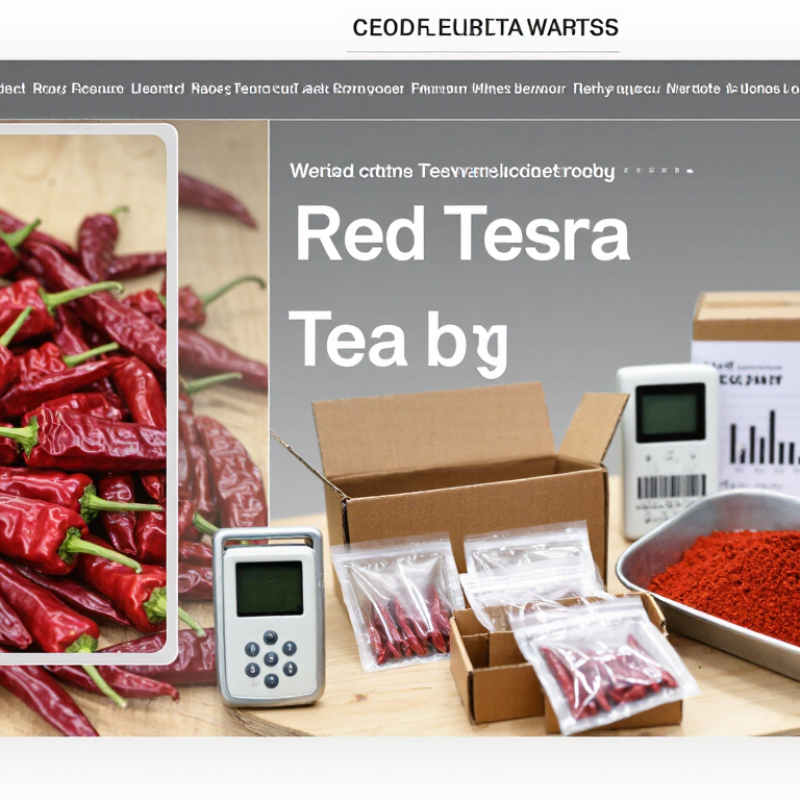
Teja Chili Specifications: 70,000–120,000 SHU, ASTA Color, and ≤11% Moisture
For global buyers, dry red Teja chili quality starts with measurable specifications, not attractive photographs. The target heat range is 70,000–120,000 Scoville Heat Units (SHU), but natural lots can vary. In my sourcing checks, I request a current laboratory report for each production lot. It should identify the test method, sample date, and lot number. Heat matters. So does consistency.
ASTA color gives buyers a practical reference for visual quality and processing performance. A strong reading usually signals vibrant red pigment, although color alone cannot confirm freshness or flavor. I inspect whole pods for dull patches, broken stems, insect damage, and uneven drying. The pods should feel dry and crisp, not soft or leathery. These simple observations remain useful beside laboratory data.
Moisture should remain at or below 11% to support storage stability and reduce mold risk. A calibrated moisture test is essential before shipment, especially after humid transit. Packaging must limit exposure to air and water, while clean pallets and traceable records support reliable handling. I also compare retained samples after arrival. Results are not always identical. Small variations can reveal sampling problems, uneven drying, or changing harvest conditions. Buyers should question unexplained differences and allow realistic tolerances in their specifications.
India Supply Analysis: USDA 2025/26 Chili Production and Export Data
2026 Best Dry Red Teja Chili Supplier for Global Buyers?
India Supply Analysis: USDA 2025/26 Chili Production and Export Data
USDA’s 2025/26 outlook offers useful direction for global Teja chili buyers. India remains a major source of dried red chilies, supported by broad cultivation and established export channels. However, production estimates are not fixed promises. Weather, crop arrivals, domestic demand, and market prices can quickly change availability.
Teja is valued for strong pungency, deep red color, and flexible use in sauces, seasonings, and processed foods. A reliable supplier should explain the origin, harvest period, grade, stem percentage, moisture level, and packing method. Request recent laboratory results for aflatoxin, pesticide residues, Salmonella, and moisture. Traceable lots matter.
Details reveal quality.
USDA export data can help buyers compare India’s trade direction, but shipment records alone cannot confirm product performance. Inspect samples for uniform color, clean pods, low breakage, and a fresh dry aroma. Containers should protect the chili from humidity during long transit. Import rules also differ by destination, so documentation must match the buyer’s country.
One point deserves reflection. The lowest quote may hide higher sorting losses, inconsistent pungency, or delayed clearance. A better purchasing decision combines USDA trends, supplier records, laboratory testing, and a small trial order before larger contracts.
2026 Best Dry Red Teja Chili Supplier for Global Buyers?
India Supply Analysis: USDA 2025/26 Chili Production and Export Outlook
India remains one of the world's largest dried chili suppliers. Production is shown in thousand metric tons, while exports represent dried chili shipments. The 2025/26 figures are forecast values; earlier export figures are rounded historical data reported through Indian spice trade statistics. Higher production and export availability can support global procurement, although quality grade, color value, moisture, aflatoxin compliance, and crop-region conditions should be verified before contracting.
Sources: USDA Foreign Agricultural Service production outlook and Indian Spices Board export statistics. Values are rounded for visualization.
Quality Verification: ISO Testing for Aflatoxin, Pesticide Residues, and Microbes
For a dry red Teja chili supplier, visual color is only an opening check. Quality verification must reach the laboratory bench, where aflatoxins, pesticide residues, and microbes are measured. An ISO/IEC 17025-accredited laboratory should document sampling, method validation, calibration, and uncertainty for every lot. Sampling matters greatly. A few bright pods cannot represent a 20-ton shipment.
Aflatoxin screening can use HPLC or LC-MS/MS, with confirmation near the applicable limit. ISO 16050 covers aflatoxin determination in food. ISO 6579-1 supports Salmonella detection, while ISO 4833-1 measures aerobic colony counts. Pesticide testing normally uses multi-residue LC-MS/MS and GC-MS/MS. Results must match the destination market’s maximum residue limits. The 2022 European Union pesticide monitoring report reviewed 110,829 samples. It reported 96.3% within legal limits and 98.3% compliant after measurement uncertainty. These figures show broad compliance, not a pass for every chili lot.
Buyers should request a lot-specific certificate, sample date, laboratory scope, and chain-of-custody records. Moisture control deserves attention. Warm, damp sacks can make a clean report outdated. I would also request sealed retention samples and retesting after prolonged storage. No test is perfect. Results become doubtful when sampling is rushed or documents copy older batches. That small doubt is useful; evidence should remain fresher than the shipment.
2026 Best Dry Red Teja Chili Supplier for Global Buyers? - Quality Verification: ISO Testing for Aflatoxin, Pesticide Residues, and Microbes
Buyer-oriented quality verification matrix for whole or crushed dried red Teja chili
| Quality Dimension | Verification Item | Reference Method or Standard | Practical Acceptance Benchmark | Recommended Evidence for Global Buyers | Verification Timing |
|---|---|---|---|---|---|
| Product identity | Botanical identity, product form, origin, crop year, and lot code | Document review; representative sampling; buyer specification | Capsicum annuum L.; whole or crushed dry red chili; traceable single lot with documented harvest and packing details | Signed specification sheet, traceability record, packing-list lot reference, and sample retention record | Before approval and for every commercial lot |
| Moisture and physical condition | Moisture, foreign matter, insects, mold damage, broken pods, and visible contamination | Validated moisture method; visual inspection; sieve or sorting inspection | Moisture commonly specified at ≤12.0% for dried chili; free from live insects, visible mold, fecal contamination, and other extraneous matter | Certificate of analysis, inspection photographs, sampling plan, and sealed counter-sample | Pre-shipment and arrival inspection |
| Aflatoxin | Aflatoxin B1 and total aflatoxins B1, B2, G1, and G2 | ISO 16050 or an equivalent validated HPLC or LC-MS/MS method | For products placed on the European Union market, a commonly applicable benchmark for spices is B1 ≤5 µg/kg and total aflatoxins ≤10 µg/kg; destination-country rules must be confirmed | Lot-specific accredited laboratory report showing result, LOQ, sampling date, laboratory competence, and regulatory basis | Every lot or according to a documented risk-based plan |
| Pesticide residues | Multi-residue screening covering pesticides relevant to chili production and the importing market | EN 15662 QuEChERS-based multi-residue analysis, LC-MS/MS and GC-MS/MS; laboratory quality system aligned with ISO/IEC 17025 | Each detected substance must comply with the importing country’s legally applicable maximum residue limit; no universal global MRL applies to every market | Full analyte list, individual results, limits of quantification, applicable MRL database, and confirmation of non-detects or compliant detections | Before shipment and whenever origin, farm program, or destination changes |
| Salmonella | Presence or absence in the analytical sample | ISO 6579-1:2017 | Absent in 25 g, unless a stricter destination or customer requirement applies | Accredited microbiology report identifying the sample mass, test method, lot number, and result | Every lot for high-risk supply chains or according to validated supplier history |
| Aerobic colony count | Total aerobic microbial count | ISO 4833-1:2013 | Set a buyer-specific limit based on intended use; a commonly used commercial target for dried spices is ≤105 CFU/g | Quantitative result in CFU/g, dilution information, method reference, and comparison with the purchase specification | Pre-shipment testing and periodic verification |
| Yeasts and molds | Yeast and mold count associated with storage stability and spoilage risk | ISO 21527-2:2008 for products with water activity ≤0.95 | A commonly used commercial target is ≤104 CFU/g; the final limit should reflect intended use and customer risk assessment | Quantitative laboratory report, water-activity result where relevant, and storage-condition record | Pre-shipment and during periodic shelf-life review |
| Escherichia coli | Indicator organism for hygiene and post-process contamination | ISO 16649-2:2001 | Use a documented buyer specification; a common commercial target for dried spices is ≤102 CFU/g | Quantitative result, sampling details, method performance information, and corrective-action history where applicable | Pre-shipment and risk-based periodic testing |
| Color and pungency | ASTA color value, visual color uniformity, and capsaicinoid or Scoville measurement where required | ASTA analytical color method; validated HPLC method for capsaicinoids | Must match the agreed product specification; color and heat values are quality grades, not universal legal limits | Retained reference sample, laboratory result, sensory comparison, and approved pre-production sample | Initial approval and every crop-year change |
| Packaging and storage | Food-contact packaging, seal integrity, lot identification, pallet condition, humidity, and pest control | Applicable food-contact legislation; HACCP-based controls; buyer packaging specification | Clean, dry, sealed, food-grade packaging with legible lot code; storage protected from moisture, pests, direct sunlight, and strong odors | Packaging declaration, loading inspection, warehouse records, photographs, and container cleanliness checklist | At packing, loading, and arrival |
| Laboratory competence | Independence, method validation, measurement uncertainty, proficiency testing, and report traceability | ISO/IEC 17025:2017 | Testing performed by a laboratory accredited for the specific matrix and methods, where available | Current accreditation scope, signed report, sample receipt record, chain of custody, and laboratory contact verification | Before supplier approval and whenever laboratory status changes |
Supplier Compliance: Codex Standards, EU MRLs, Traceability, and HACCP
For global buyers seeking the best dry red Teja chili supplier in 2026, compliance must begin before shipment. Codex Standard CXS 326-2017 covers dried or dehydrated chili peppers, including whole, broken, and ground products. A reliable supplier should test pesticide residues, moisture, foreign matter, aflatoxins, and microbiological hazards by production lot. HACCP should follow Codex CXC 1-1969, with documented hazard analysis, critical limits, corrective actions, and verification records. Paperwork alone is not enough.
EU buyers must check Regulation (EC) No 396/2005 and the current EU Pesticides Database. MRLs depend on the pesticide, crop category, and intended market. One laboratory report cannot replace destination-specific review. EFSA’s 2022 pesticide monitoring report assessed 110,829 food samples; 96.3% had no quantifiable residues. This broad result is encouraging, but it does not prove safety for every Teja chili lot. Chili needs its own evidence.
Traceability should identify the farm group, harvest date, drying site, processing batch, and container number. EU food law requires movement records one step backward and forward. Strong suppliers can produce a recall trail within hours, not days. A spreadsheet may look complete while hiding mixed harvests. That weakness deserves attention.
In practice, buyers should request accredited laboratory results, HACCP verification, calibration records, and retained samples before approving volume contracts. Suppliers should also explain drying controls, because uneven drying can create moisture pockets that routine sampling misses.
Global Buying Scorecard: Price, MOQ, Lead Time, Incoterms, and 2026 Capacity
For 2026, global buyers should score Teja chili suppliers beyond the headline price. UN Comtrade places dried Capsicum under HS 090421 and crushed products under HS 090422, so compare like-for-like shipments. Request FOB and CIF quotations separately. Include moisture, stem percentage, color, pungency, packing, and inspection costs. A cheaper quote may hide weaker specifications.
Price matters, but MOQ can matter more for smaller importers.
My practical scorecard gives:
landed cost 20%
quality consistency 20%
lead time 15%
MOQ 10%
Incoterms 10%
verified capacity
A workable target is 20–35 days after deposit and approved artwork. Longer windows need written production milestones. Incoterms 2020 should define insurance, risk transfer, and port charges clearly. DAP may appear simple, but import clearance remains the buyer’s responsibility in many markets.
Spices Board India export statistics show chili remains a major commercial spice category, while FAOSTAT and UN Comtrade provide broader production and trade context. Neither database isolates every Teja grade. That limitation matters. Ask for three recent laboratory reports, not one attractive sample.
Check aflatoxin, pesticide residues, Salmonella, moisture, and ASTA color where relevant.
For 2026 capacity, request monthly output records, drying-season calendars, and backup raw-material sources. I would discount unverified capacity claims. Even good suppliers sometimes overpromise during peak harvest.
FAQS
The target range is 70,000–120,000 Scoville Heat Units. Heat varies naturally between production lots. Request a current laboratory report.
It should identify the testing method, sample date, and production lot number. A recent report is more useful than an attractive product photograph.
ASTA color provides a practical reference for red pigment and processing performance. It cannot confirm freshness or flavor. Inspect the pods too.
Look for dull patches, broken stems, insect damage, and uneven drying. Good pods should feel dry and crisp, not soft or leathery.
Moisture should remain at or below 11%. Calibrated testing helps reduce mold risk, especially after humid transportation. Moisture pockets can escape routine sampling.
Suppliers should test pesticide residues, moisture, foreign matter, aflatoxins, and microbiological hazards. Paperwork is not proof. Ask for accredited laboratory results.
Records should show hazard analysis, critical limits, corrective actions, and verification activities. Buyers should also request calibration records. Missing details deserve questions.
It should identify the farm group, harvest date, drying site, processing batch, and container number. A recall trail should work within hours, not days.
Check the pesticide limits applying to the destination market. Limits can vary by pesticide, crop category, and intended use. One report cannot replace this review.
Arrival results may differ from pre-shipment results. Differences can reveal uneven drying, sampling problems, or changing harvest conditions. Small variations need investigation.
Conclusion
This guide explains how global buyers can evaluate Dry Red Teja Chili suppliers for 2026. It covers key product specifications, including an expected heat range of 70,000–120,000 SHU, suitable ASTA color, and moisture at or below 11%. It also reviews India’s supply outlook using USDA 2025/26 production and export data, helping buyers assess seasonal availability, market stability, and potential purchasing risks.
Quality and compliance are central to responsible sourcing. The guide outlines ISO-based testing for aflatoxin, pesticide residues, microbial safety, moisture, and color, together with Codex standards, applicable EU MRLs, batch traceability, and HACCP systems. A practical buying scorecard compares price, MOQ, lead time, Incoterms, documentation, and projected 2026 capacity, enabling importers to select suppliers based on verified quality, transparent logistics, regulatory readiness, and dependable long-term supply rather than price alone.

Blog Tags: